

You’ve likely noticed the growing impact of artificial intelligence in healthcare, but you may not realize how it’s transforming podiatry practices. From streamlining appointment scheduling to enhancing patient care, conversational AI offers practical solutions that benefit both practitioners and patients. As you consider modernizing your podiatry practice, these three proven AI tactics will help you boost engagement, improve outcomes, and create a more efficient patient experience.
Proactive Patient Communication With AI Chatbots
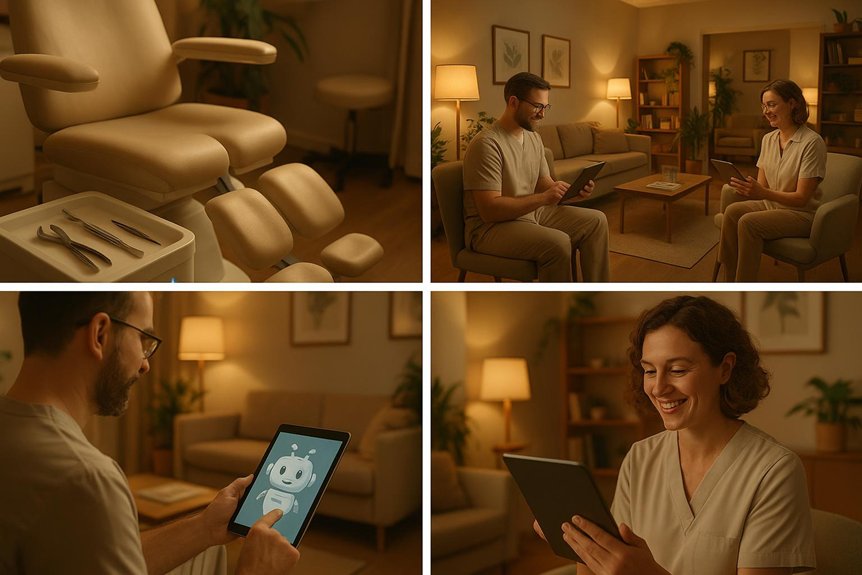
Three key advantages make AI chatbots invaluable for proactive podiatry patient communication. First, chatbots can engage multiple patients simultaneously, sending timely appointment reminders, post-treatment instructions, and follow-up prompts.
Second, they’ll analyze patient data to identify individuals who need preventive care, alerting them about diabetic foot screenings or orthotic adjustments before problems develop.
Finally, AI chatbots customize their communication style to match each patient’s preferences. You’ll reach younger patients through text messages while connecting with older ones via voice calls or emails. The chatbots also learn from interactions, improving their responses based on patient feedback. By integrating these automated conversations into your practice, you’ll enhance patient compliance, reduce no-shows, and maintain consistent communication without straining your staff resources.
Automated Follow-up Care and Treatment Reminders
While traditional follow-up methods rely heavily on staff phone calls, automated AI systems now streamline post-treatment care coordination for podiatry practices. You’ll benefit from intelligent scheduling that sends timely reminders for wound checks, orthotic fittings, and physical therapy appointments.
AI chatbots can track your recovery progress by asking targeted questions about pain levels, mobility, and medication adherence. The system flags concerning responses for your podiatrist’s immediate review. You’ll receive customized care instructions, exercise demonstrations, and wound care tutorials through multimedia messages.
The AI remembers your treatment history and adapts follow-up timing based on your specific condition, whether you’re recovering from bunion surgery or managing diabetic foot care. It’ll even coordinate with your pharmacy for prescription refills and send alerts when it’s time to replace orthotics or therapeutic footwear.
Intelligent Appointment Scheduling and Resource Management
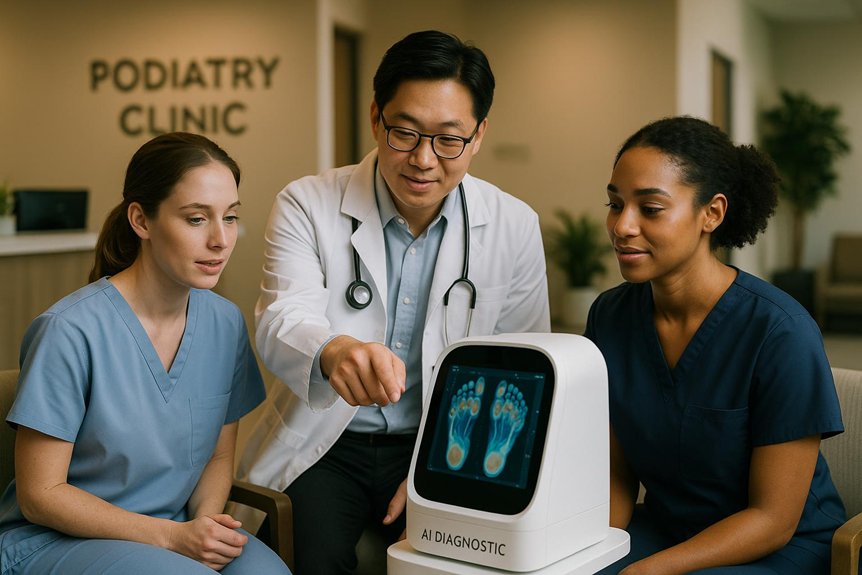
Building on automated follow-up systems, modern podiatry practices now leverage AI-powered scheduling platforms to optimize patient flow and resource allocation. These intelligent systems analyze historical data, patient preferences, and staff availability to suggest optimal appointment slots and distribute resources efficiently.
You’ll find that AI schedulers can predict appointment duration based on procedure type, patient history, and complexity level. The system automatically allocates examination rooms, equipment, and staff while considering factors like sterilization time between patients. When you’re dealing with multiple practitioners, the AI balances workloads and matches patients with the most suitable podiatrist based on expertise and past interactions.
The platform also factors in emergency slots, reduces double-bookings, and minimizes wait times by identifying and filling last-minute cancellations through automated waitlist management.
Conclusion
By implementing these three conversational AI tactics in your podiatry practice, you’ll transform patient engagement and streamline operations. You can count on AI chatbots to maintain consistent communication, automated follow-ups to ensure treatment compliance, and intelligent scheduling to optimize your calendar. Don’t wait to embrace these digital solutions – they’re essential tools for delivering the responsive, personalized care your patients expect.